TFN Talks with Nir Eyal
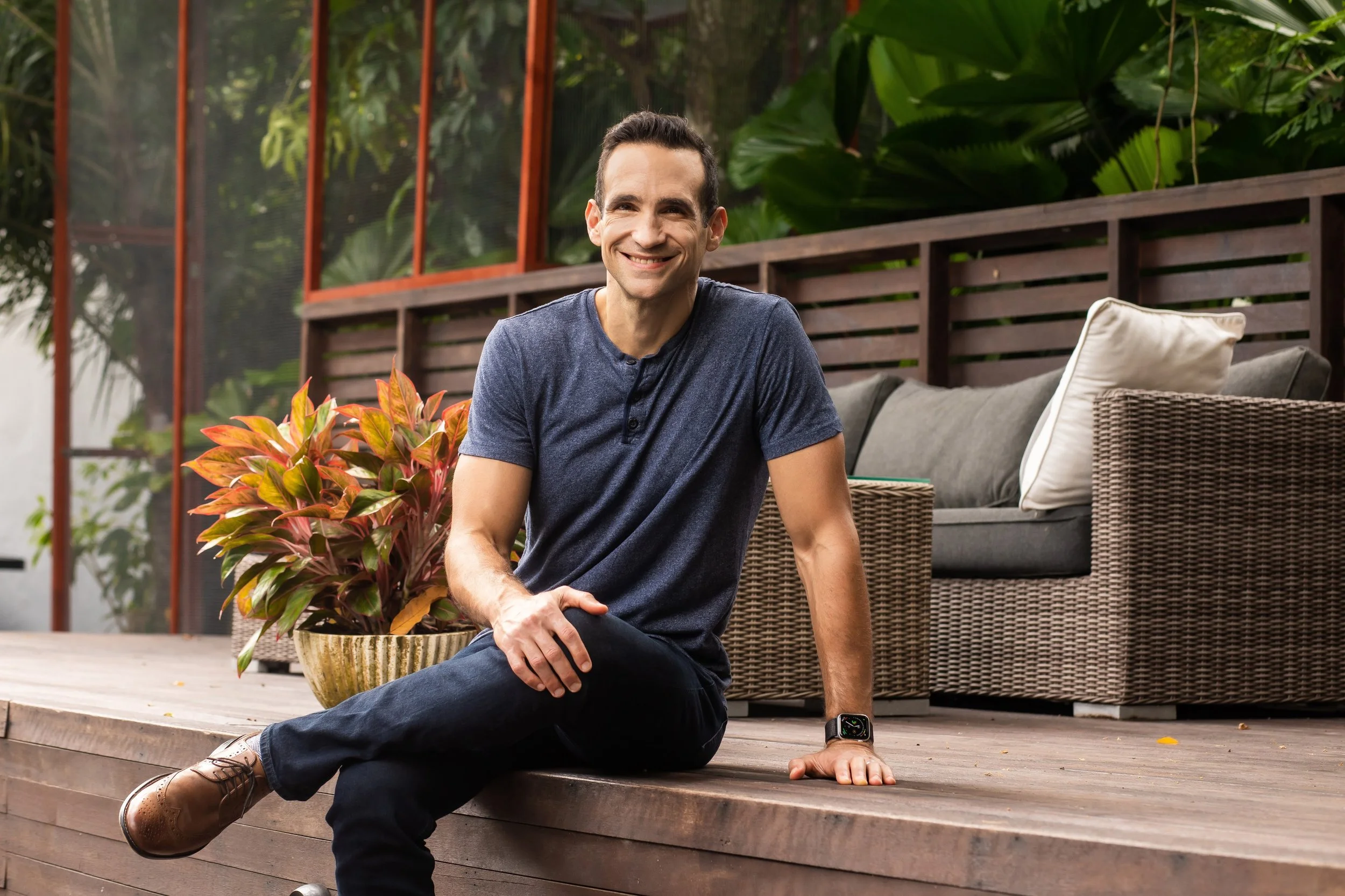
TFN Talks had the honour of sitting down with best selling author Nir Eyal, to talk about his much anticipated new book Beyond Belief. Nir Eyal is an internationally recognized expert in behavioural design and the psychology of habit formation. He is the author of bestsellers Hooked: How to Build Habit-Forming Products, Indistractable and a former professor at Stanford Graduate School of Business. Nir’s insights focus on how technology influences attention, behavior, and personal agency in an increasingly distracted world.
Nir, tell us a little bit about your background. Where were you born and raised and how has your background led you down the path of becoming a writer?
I was raised in Orlando, Florida. My path to writing wasn't linear—I spent years in the tech and advertising industries before I started putting pen to paper. What pushed me toward writing was frustration, honestly. I kept seeing the same patterns in why some products succeeded and others failed, and I couldn't find a book that explained it clearly. So I wrote the book I wished existed. My background in tech gave me the practitioner's perspective, and my time teaching at Stanford helped me learn how to explain complex ideas simply.
What initially sparked your interest in the psychology behind how we choose and use products, and was there anything in particular that you were surprised to learn while conducting research for Hooked?
I got hooked on this topic (pun intended) while working at the intersection of gaming and advertising. I noticed that some products seemed to create habits effortlessly while others—even superior products—flopped. I wanted to understand why.
What surprised me most was how little of habit formation is about the product itself and how much is about the internal trigger—the uncomfortable emotional state that precedes the habitual behavior. We don't use products because they're shiny; we use them because they scratch a psychological itch. Boredom, loneliness, uncertainty, fatigue—these are the real drivers. Once I understood that, everything else clicked into place.
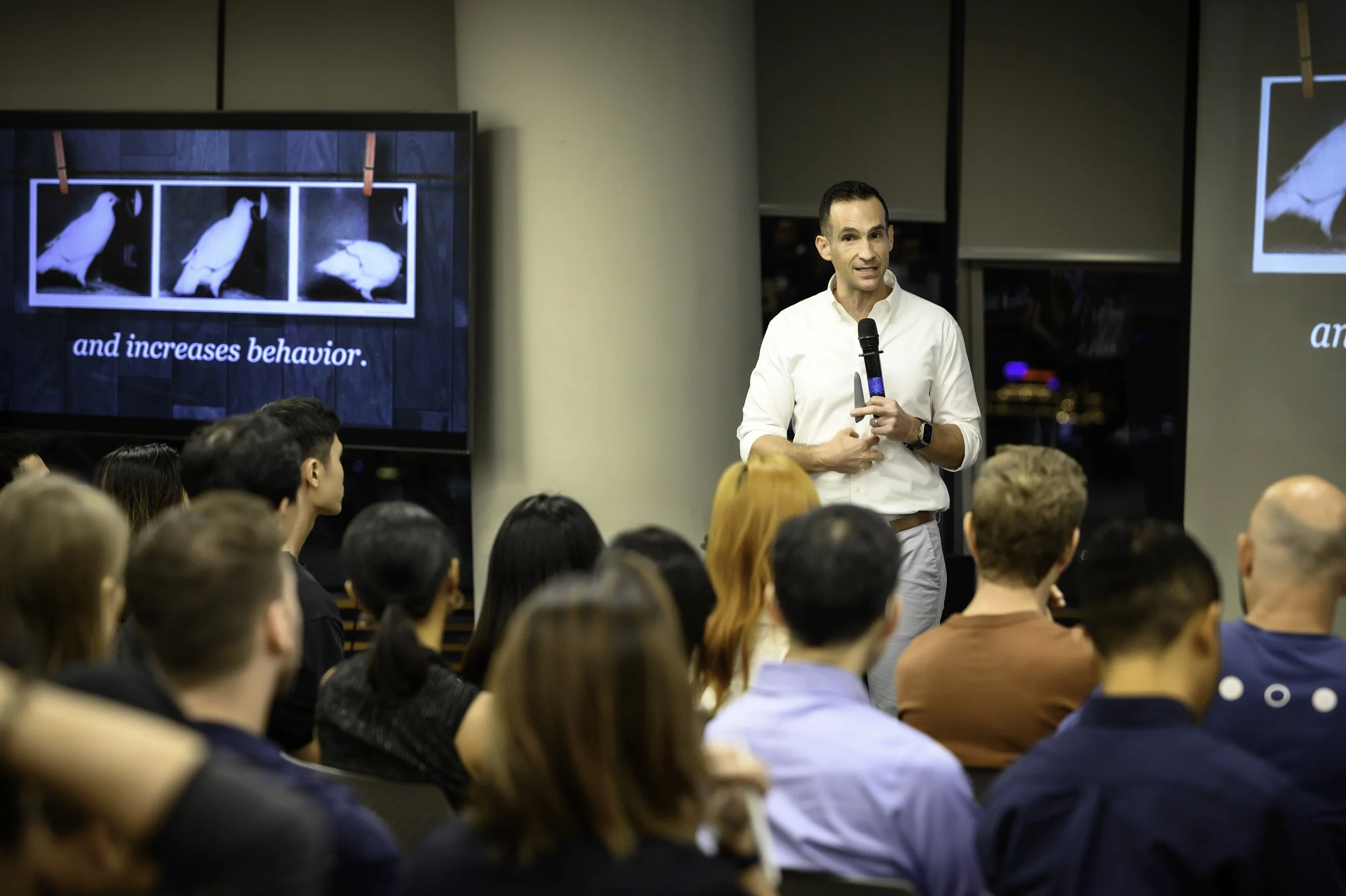
Can you explain the 'Hooked Model' to our readers?
The Hooked Model is a four-step process that, when repeated, creates habits:
First, there's the Trigger—either external (like a notification) or internal (like feeling bored). Then comes the Action—the simplest behavior done in anticipation of a reward, like opening an app. Next is the Variable Reward—the scratch for the itch, but with an element of mystery that keeps it interesting. Finally, there's the Investment—where the user puts something into the product (time, data, effort, social capital) that makes the product better with use and increases the likelihood of returning.
The key insight is that hooks aren't created by any single element but by cycling through all four phases repeatedly. I go much deeper into each phase in Hooked.
How do companies reconcile profit with ethics? How do you create a product without infringing on users' mental health?
This is the question I've wrestled with more than any other, and it's why I wrote Indistractable after Hooked.
Here's my framework: I believe product makers have a moral obligation to help users do what they want to do. If your product helps people live the life they want, you're doing good work. If your product exploits users by keeping them engaged against their own interests, that's coercion.
The "regret test" is useful here: Does your user regret the time spent? If they consistently feel worse after using your product, something's broken—ethically and eventually commercially, because those users will churn.
Is it really free will when it's you against teams of researchers whose goal is to hook users?
I hear this argument often, and I understand the concern, but I push back on it. The idea that we're helpless against technology is itself a limiting belief—and a dangerous one, because it becomes a self-fulfilling prophecy.
Yes, these companies employ smart people. But the same is true of all forms of media. We've always had to contend with businesses trying to capture our attention and money. The solution isn't to throw up our hands and declare defeat. It's to become "indistractable"—to understand the techniques being used and develop counter-strategies.
The victim narrative feels comforting, but it's disempowering. I'd rather give people tools to fight back.
If you were to summarize the advice in Indistractable in just a few sentences, what would you advise?
The opposite of distraction isn't focus; it's traction—actions that pull you toward what you want in life.
First, master your internal triggers—understand that all distraction starts with discomfort, and learn to deal with that discomfort differently. Second, make time for traction by turning your values into time through a technique called "timeboxing." Third, hack back external triggers—remove the pings and dings that aren't serving you. Fourth, use precommitments—pacts that help you do what you say you're going to do.
You're not broken. You don't have a character flaw. Distraction is a solvable problem with the right tools. You can find all of them in Indistractable.
What places have left a lasting impression on you and why?
Japan has been extraordinary—there's something about the intentionality of Japanese culture that resonates deeply with my work. The concept of shokunin, the dedication to mastering one's craft, is everywhere you look.
And honestly, some of my most formative experiences have been in the most ordinary places. I've learned that where you are matters far less than how present you are while you're there.
How do you balance a thriving career with being a good husband and father?
The biggest shift was when I started timeboxing my calendar according to my values, not just my to-do list. I literally schedule time with my wife and daughter the same way I schedule business calls. If it's not on my calendar, it doesn't happen.
I also practice what I call "schedule syncing" with my wife. Every week, we sit down to review our calendars together. No surprises, no resentment. It sounds unromantic, but it's actually the opposite—it's showing that you respect your family's time as much as your clients'.
The myth of the coveted entrepreneurial life of working 24/7 is a trap. What's the point of freedom if you use it to chain yourself to your desk?
What challenges have you had to overcome in your professional career?
Early on, my biggest obstacle was imposter syndrome. Who was I to write about habit-forming technology?
I eventually realized that my "outsider" perspective was an asset, not a liability. I could translate academic research into practical advice precisely because I wasn't ensconced in academia.
More recently, the challenge has been managing my own distraction while writing about distraction. The irony wasn't lost on me. Writing Indistractable forced me to practice every technique I was preaching, which ultimately made the book better—and made me better.
Writing, teaching, or consulting—which do you enjoy most?
Writing. Without question.
Teaching and consulting are wonderful—there's an immediate feedback loop, the energy of live interaction. But writing is where ideas get refined to their essence. It's harder and lonelier, but when you get it right, when you find exactly the right words to express an idea—that feeling is unmatched.
Plus, a book reaches people I'll never meet, in places I'll never go, at times when I'm asleep. That kind of leverage is remarkable when you think about it.
How integral is an Ivy League education to starting or joining a successful business?
Less than people think, and probably less than it used to be.
My degrees from Emory and Stanford opened doors—I won't pretend otherwise. Credentials matter in certain contexts. But I've met plenty of Stanford MBAs who are mediocre operators and plenty of college dropouts who are brilliant entrepreneurs.
What matters more than the degree is the ability to learn continuously, to take feedback, and to ship things into the world. The best education is doing the work, failing, learning, and iterating. No classroom can replicate that.
If anything, the emphasis on prestigious credentials can become a crutch—a way to seek external validation rather than build genuine capability.
Can you talk about your upcoming book Beyond Belief?
Beyond Belief is the culmination of six years of research into how our beliefs shape our reality—not in some mystical "law of attraction" way, but through concrete psychological mechanisms.
The central idea is that beliefs are tools, not truths. And like any tool, some beliefs are more useful than others. The book introduces what I call the "Three Powers of Belief"—how beliefs direct our Attention, shape our Anticipation, and influence our sense of Agency.
What inspired it? I kept meeting people who had all the tactics—they'd read the productivity books, installed the right apps, knew the life hacks—but they were still stuck. The missing piece wasn't information; it was belief. They didn't believe they could change, so they didn't.
The reader will learn how to replace limiting beliefs with more empowering ones that actually help them achieve breakthrough results.
It's the most personal book I've written, and I think it completes the trilogy: Hooked was about how products shape behavior, Indistractable was about how we can take back control, and Beyond Belief is about the deeper layer—the stories we tell ourselves that make everything else possible.