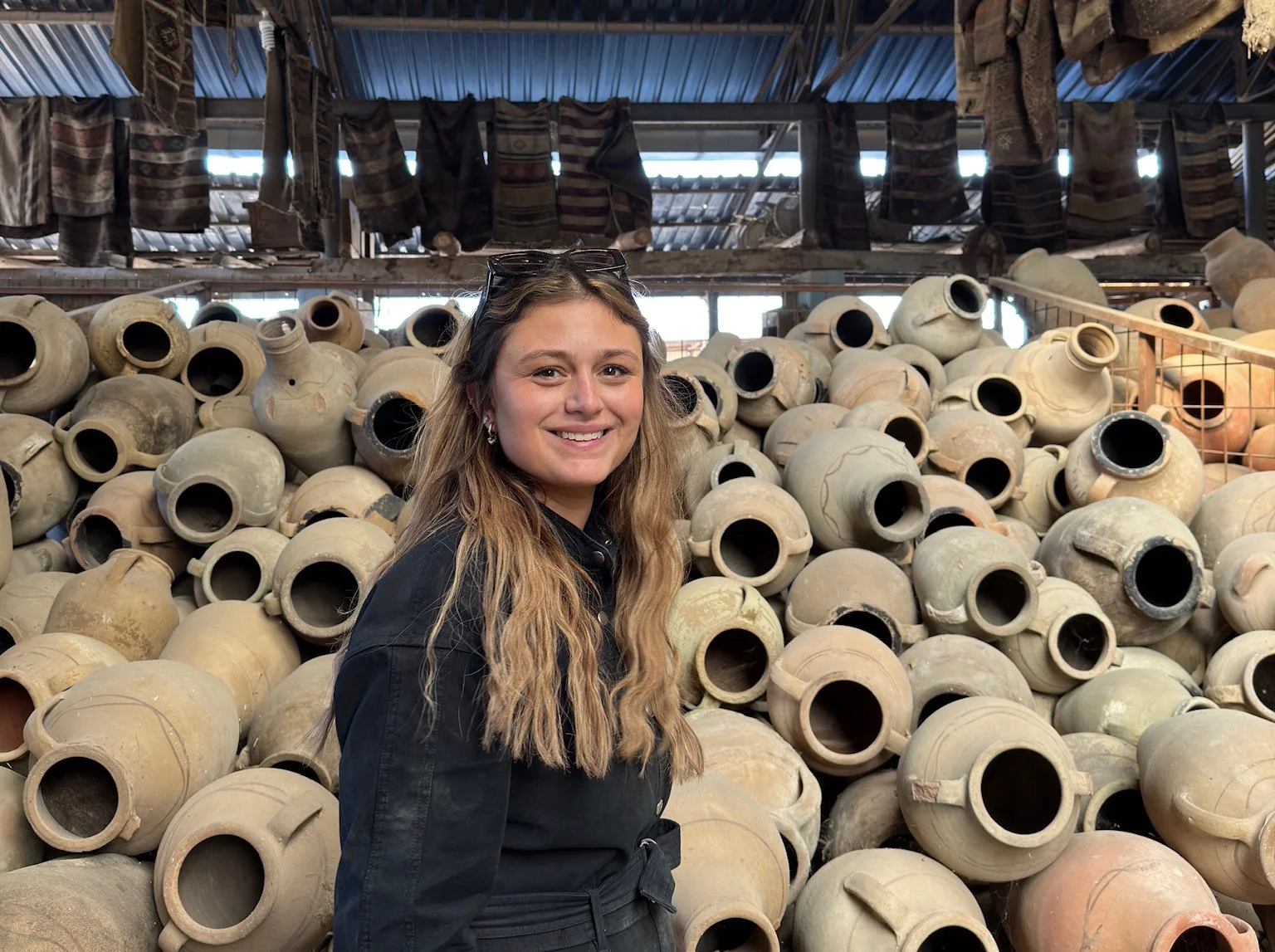
TFN Talks sat down with Elissia Aycan, Co Founder and Chief Executive Officer at AMAVI Atelier, Toronto’s exquisitely curated, family run home goods retail space, which sources unique, antique architectural salvage from around the world. We talked about the inspiration behind AMAVI, its multifaceted cultural heritage and stories behind the timeless artifacts you can find in this one of a kind atelier.
Elissia can you tell us a bit about where you are from and how this has informed the journey to where you are today?
I come from a layered cultural background. My mother’s side is Sicilian, and my father’s roots are Turkish and Finnish, so I grew up between contrasting worlds, Mediterranean being warm and ornate alongside Northern restraint and simplicity. That contrast shaped how I see space, objects, and beauty. Family has always been central to my life. I grew up very close to my grandmother, who comes from a long line of Finnish artists. Some of my earliest memories are of sitting beside her drawing, looking through her jewelry, and exploring objects she had collected from around the world. Those moments taught me to see objects as carriers of memory and history rather than decoration alone.
If you’ve visited the Amavi showroom, you’ll notice paintings and photographs of my family throughout the space. That was intentional. The people who shaped me are very much part of the environment. Amavi is not separate from my life, but an extension of it.
How did the Amavi Atelier take shape and what was the inspiration behind your particular aesthetic?
Amavi began as an idea long before it became a business. For years, my dream was simply to travel, discover, and collect beautiful things; objects with depth and character that I couldn’t find back home. In my twenties, I studied art history in Italy, which sharpened my eye and deepened my understanding of craftsmanship and authenticity. Living there taught me to recognize and appreciate the difference between real age and imitation; between patina formed through use and time, and objects designed to appear old. That experience shaped Amavi’s aesthetic language. The space reflects a layering of cultures brought together with intention. I only choose pieces I would want in my own home, which keeps the curation personal and honest.
What is it like working with your family on Amavi? How did you determine which roles you would take, or did it come naturally?
Working with my family has been incredibly grounding. The roles developed naturally rather than being assigned. I focus on creative direction, sourcing, and curation, while my brother Alessandro oversees operations and logistics. My parents bring warmth and hospitality, which have become a defining part of the showroom experience. Even my uncle (an artist in his own right) and sister, who aren’t involved in the day-to-day, helped paint the venetian plaster-look walls. That sense of shared effort is built into the space itself.
What can our readers find at Amavi Atelier and where are the pieces sourced from?
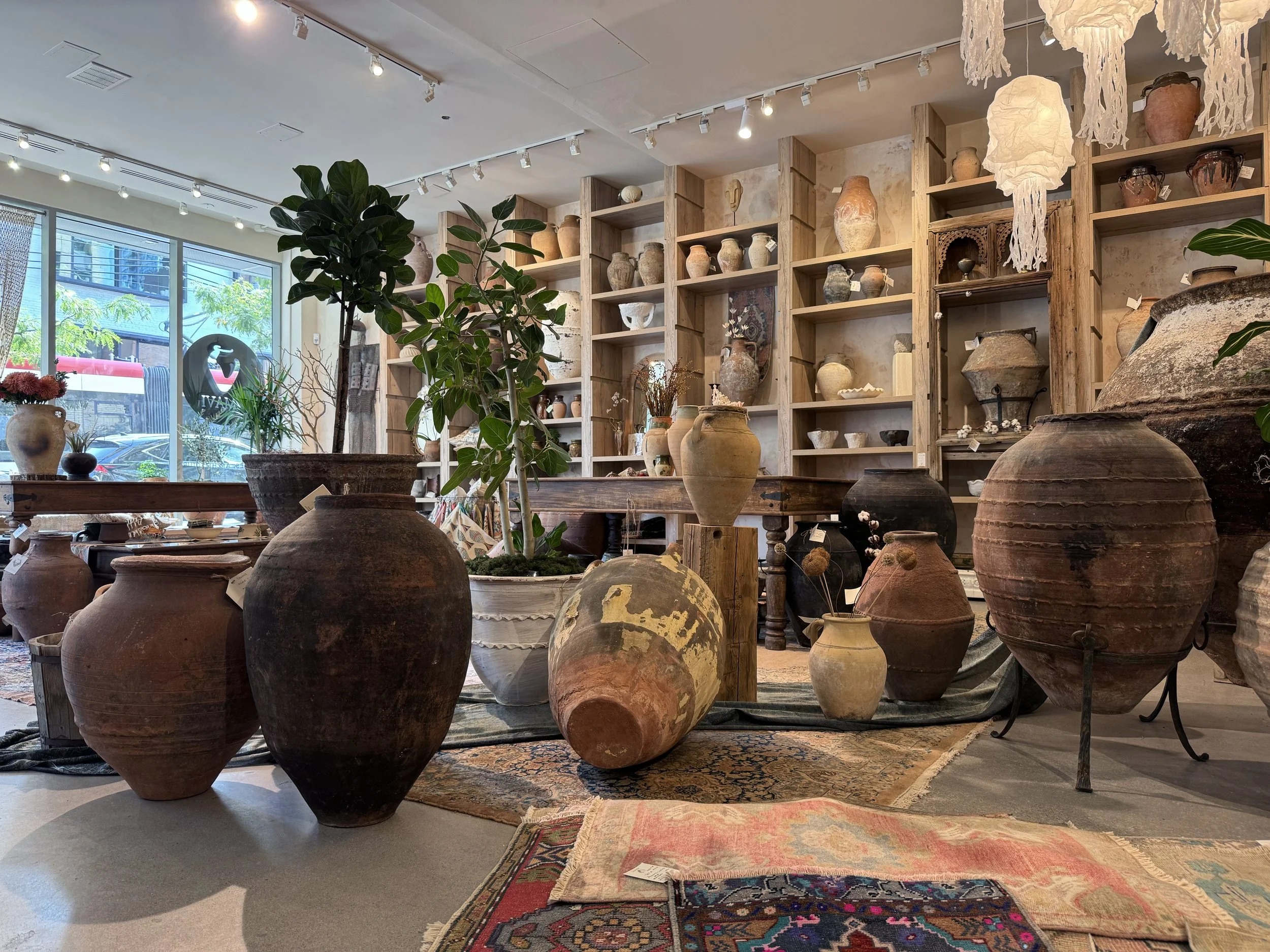
Amavi Atelier offers a curated selection of artisanal home goods, including ceramics, textiles, vintage, antique pieces, and sculptural objects. We source primarily from Turkey and Sicily, along with select finds from the wider Mediterranean, Europe, Asia and Africa. I’m drawn to pieces with provenance and honesty. Real vintage objects show their history quietly through softened edges, worn surfaces, and subtle imperfections created by use. Those details aren’t flaws, they’re what give an object its presence and beauty.
The pieces at Amavi are a very unique aesthetic for Toronto. Who would you say comprise the bulk of your clientele? Do you work with interior designers?
Our clientele is quite diverse; homeowners, travelers, creatives, and collectors who want their spaces to feel layered and personal rather than polished or predictable. We also work with interior designers and stylists who value pieces with character and narrative. Many designers come to Amavi looking for elements that ground a space rather than simply decorate it.
What are your hopes for the future of Amavi? Would you ever open multiple showrooms, maybe internationally?
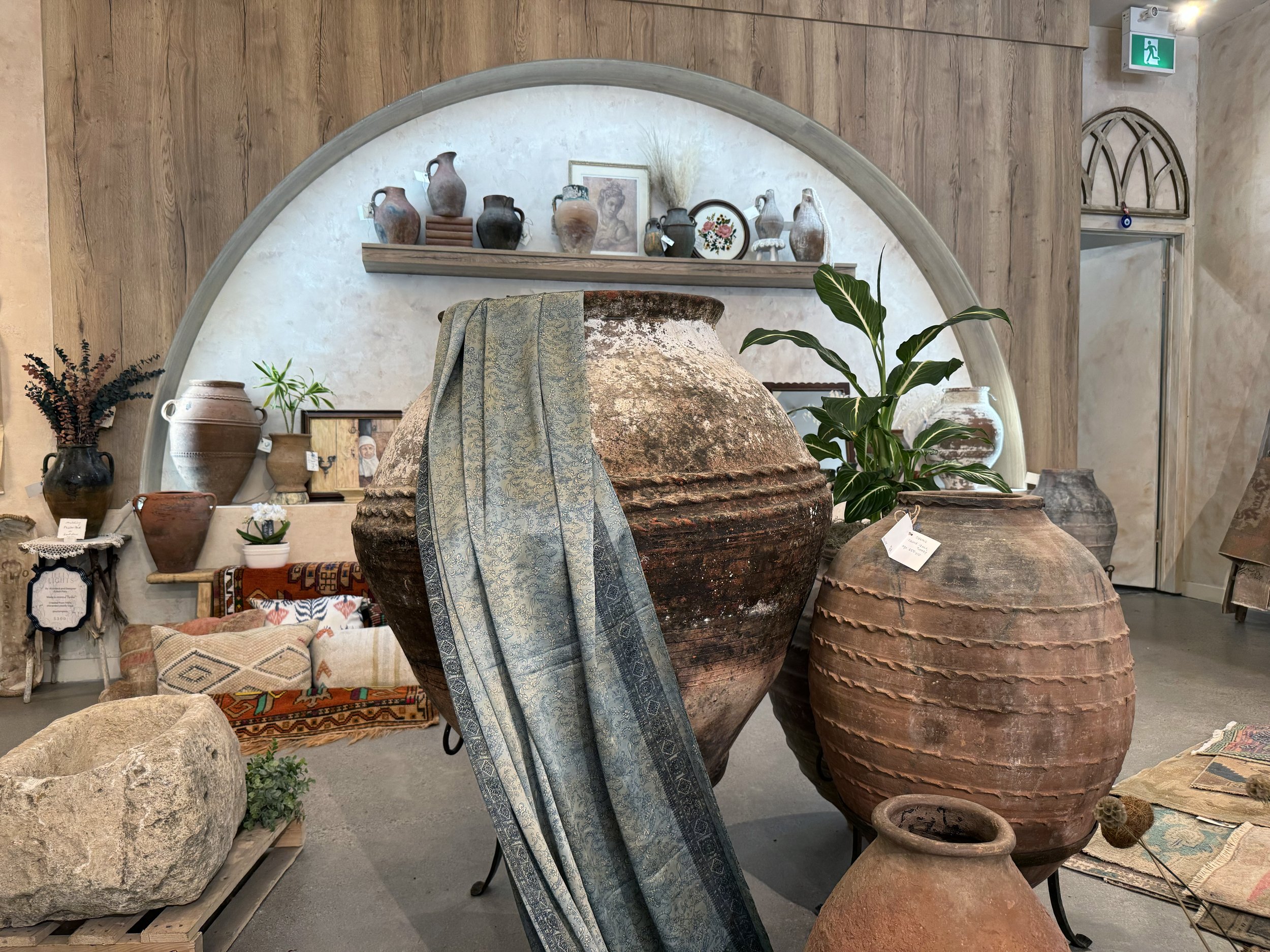
Right now, my focus is on nurturing what we’ve built and continuing to grow within the Riverside community, which I genuinely love. In the future, I’m open to thoughtful expansion; whether through collaborations, workshops, or new locations. Only if it feels true to the spirit of Amavi. The intimacy and sense of connection will always come first.
How do you curate a space like Amavi with so many unique statement pieces without the elements clashing or competing with one another?
My approach to curation is intuitive and visual. I’m very aware of how a space feels, and I can sense quickly when something doesn’t belong. I tend to work with repetition, balance, and natural rhythm; often grouping in threes and layering textures and tones the way they appear in nature. Allowing each piece room to breathe creates harmony rather than competition.
What have been some challenges and obstacles that you have had to overcome in your career as a founder and setting up Amavi Atelier?
One of the biggest challenges has been taking something that began as a dream; traveling and collecting beautiful things, and turning it into a tangible business.
There’s a vulnerability in putting everything into a vision and trusting that others will see it the way you do. Beyond the emotional risk, there are the practical challenges: building out a physical space, sourcing internationally, and safely transporting fragile, one-of-a-kind pieces from collectors and artisans around the globe. Learning to balance intuition with structure has been the most demanding part of the process, and also the most rewarding.
How do you strike a balance between profitability and accessibility in such an organic way?
That balance comes from being very intentional about sourcing. Because I select every piece myself, I’m mindful of quality, longevity, and value. While we carry antiques and statement pieces, I always want Amavi to feel approachable. Offering a range of price points allows people to connect with the space in different ways. Everyone deserves to be surrounded by beautiful things in their homes.
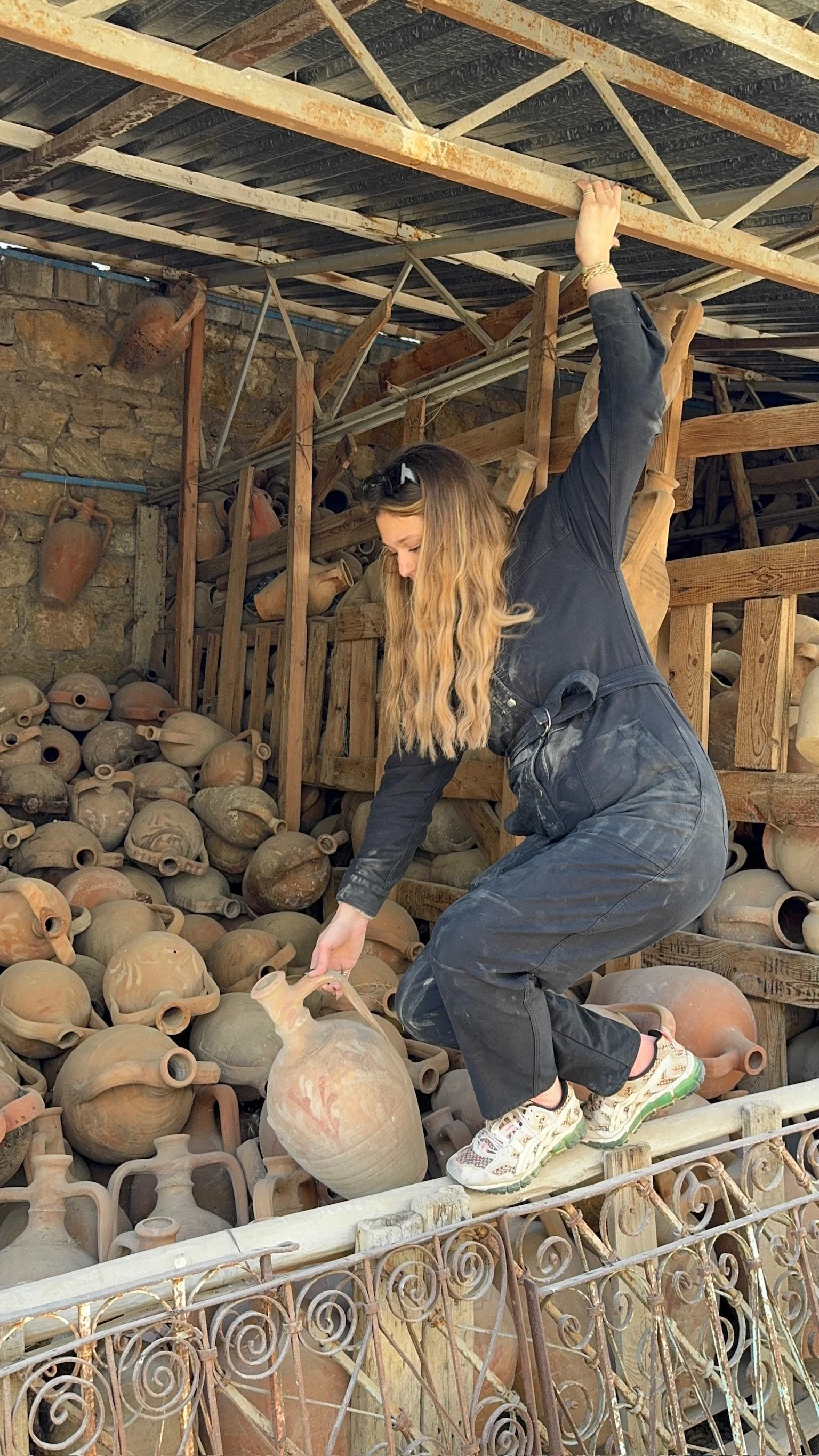
I see that you are a fellow lover of ceramics. Can you speak about your process in sourcing particular pieces and shipping them to Canada?
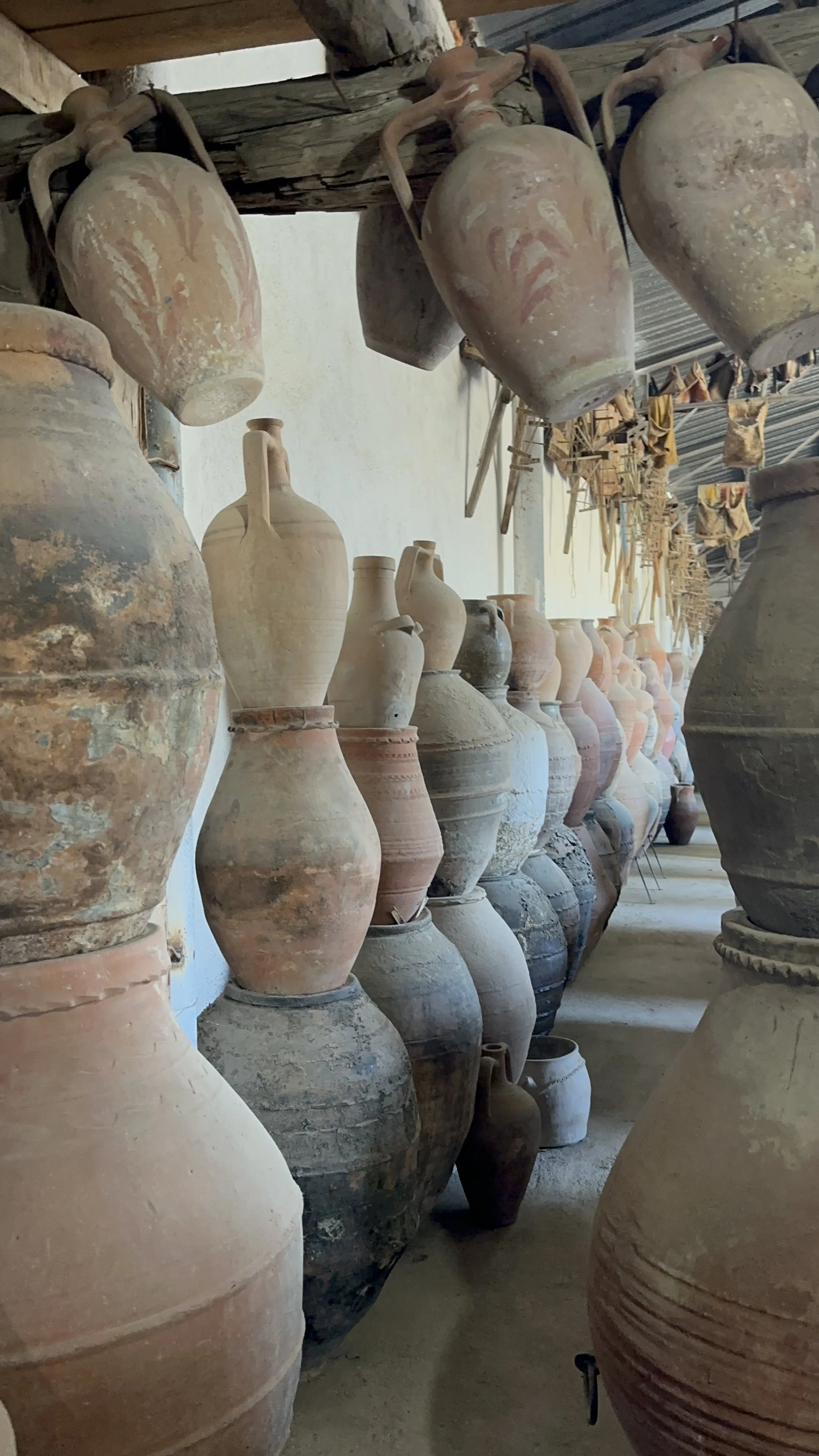
Ceramics have always felt grounding to me. Knowing they come directly from the earth gives them a sense of permanence, shaped by human hands, and returned to us as objects of daily life. I’m drawn to pieces that are handmade, tactile, and expressive, often imperfect in the most honest way. I love imagining the many hands they’ve passed through, the meals they’ve helped prepare, and how time has slowly transformed them. Through use and patina, these vessels become something more than functional; they become quiet works of art.
I visit artisans and workshops and choose pieces that reflect tradition and individuality. Shipping ceramics requires great care, so we work with trusted partners and specialized packaging to ensure everything arrives safely.
As a fellow Fearless Nomad, what would you say have been some of your favourite places in the world to visit and why?
I’ve been fortunate to travel through many parts of Asia, Africa, the Mediterranean, and across Europe, and each place has shaped me in a different way. I don’t think of my travels in terms of favourites so much as chapters, each destination marking a moment in my life and a shift in perspective. Every place opens my eyes to new ideas; how people live, create, gather, and honour tradition. The more I travel, the more I add to my own perception of the world.
I feel deeply grateful for every place I’ve experienced. At the same time, the hardest part of travel is always leaving and knowing you may never return to that exact place, that moment, or that version of yourself again.
What has been the biggest takeaway for you so far in co-founding and running your own business?
The biggest takeaway has been learning how much belief it takes to build something meaningful. Running your own business requires you to trust your instincts while accepting uncertainty. Watching people connect with Amavi, recognize authenticity in the objects, and share their own memories has reinforced that building something with sincerity still matters.