TFN Talks with Mingma David Sherpa
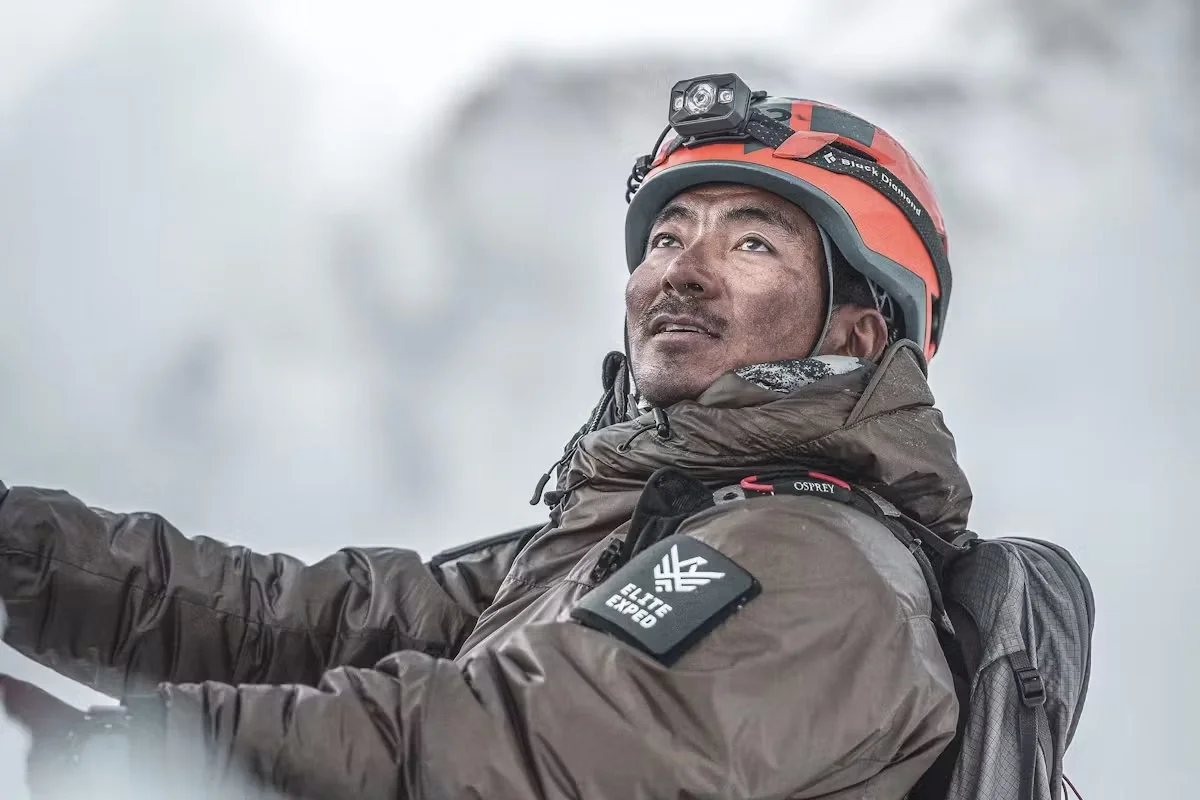
TFN Talks had the immense honour of sitting down for a conversation with Mingma David Sherpa, a Nepalese mountaineer, politician and co founder of Elite Exped. He was until 2024 the youngest person to climb all 14 eight-thousanders, and holds the Guinness World Record for fastest time to climb Everest and K2. A career built on his quiet, steely determination, and an unparalleled ability for meticulous planning, these character traits have helped him become one of the most outstanding climbing talents of his generation.
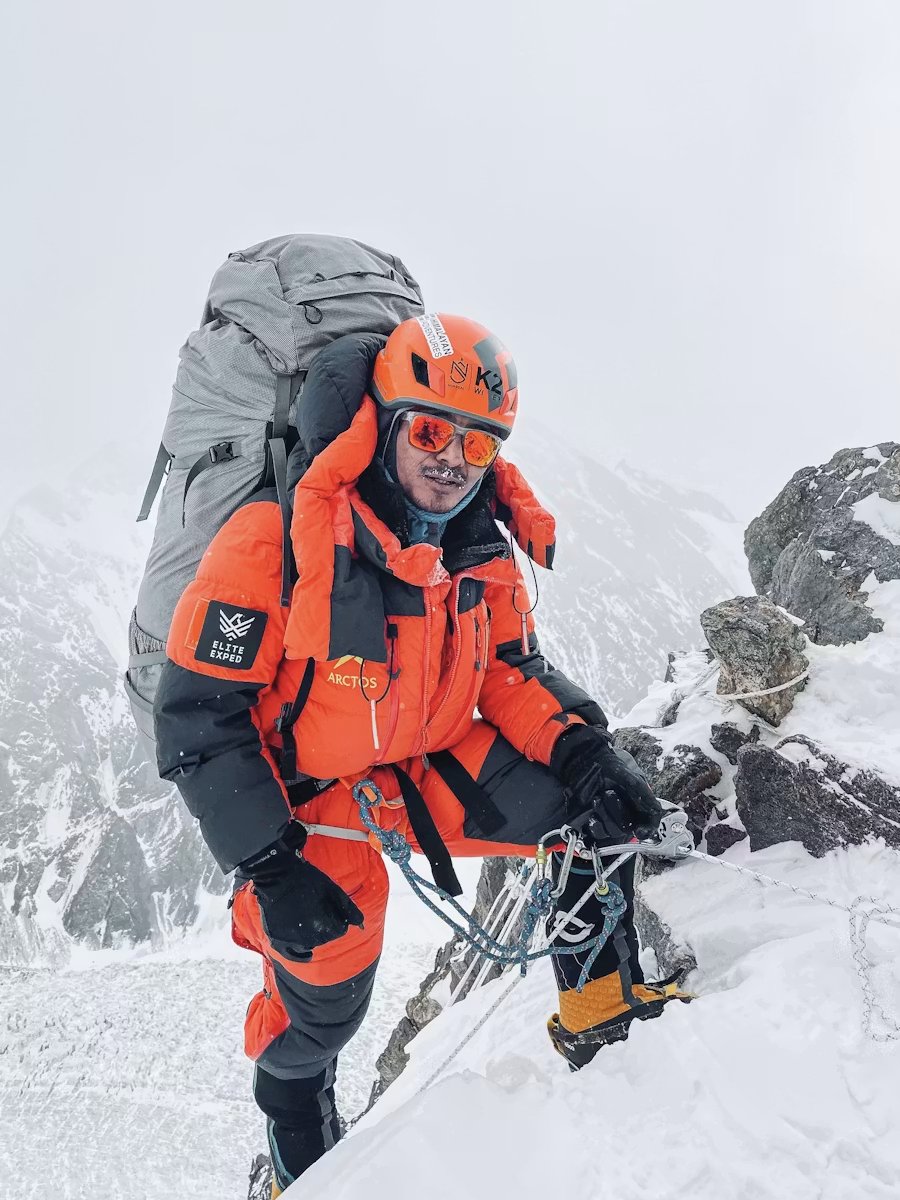
You became one of the ten Nepali mountaineers that made history on January 16th, 2021 as the first to ascend K2 in winter. After weather conditions turned against the climbers in the lower camps at the foot of K2, you banded with mountaineers of three separate teams to join efforts and climb the peak together, as a one team. This was the first successful K2 winter expedition after numerous attempts since 1987. Can you talk about the importance and value of teamwork in mountaineering?
The winter ascent of K2 was a powerful reminder that in the mountains, teamwork is everything. No individual can succeed alone at that altitude and in such extreme conditions. When our separate teams decided to unite as one, it wasn’t about personal recognition — it was about making history together for Nepal and for the mountaineering community.
We trusted one another with our lives. Every rope fixed, every step broken in deep snow, every decision was shared. That climb showed the world what is possible when ego is set aside and people work toward a common purpose. For me, teamwork is not just strategy; it is the spirit that keeps everyone safe and moving forward.
Why is K2 considered such a dangerous climb and what stood behind your decision, and the other team members’ decision to climb this mountain in winter?
K2 is often called the “Savage Mountain,” and it truly earns that name. The routes are steep and technical, the weather changes quickly, and avalanches and high winds are constant threats. In winter, temperatures can fall below –40°C, and the margin for error becomes almost zero.
So why attempt it? For many of us, it represented the last great challenge in high-altitude mountaineering. But beyond that, we wanted to demonstrate the strength, skill, and leadership of Nepali climbers on the global stage. Our decision was never about chasing danger — it was about preparation, experience, and believing that together we were ready.
What advice would you give someone who wants to start their journey in mountaineering and eventually go on to climb the eight thousanders?
Start small and respect the process. The mountains reward patience and punish shortcuts. Build your skills gradually — learn technical climbing, understand altitude, train your body and your mind.
Find good mentors, climb with experienced guides, and focus on becoming a complete mountaineer rather than rushing toward big peaks. Remember, reaching the summit is optional; returning safely is mandatory.
Most importantly, always respect the mountain. Confidence is important, but humility will keep you alive.
Mountaineering has become your whole life. I imagine that you must have a strong spiritual connection with the mountains? Can you talk about this and what the sport means to you?
Absolutely. Having grown up in the Himalayas, the mountains have always felt like home to me. They teach humility because no matter how strong you are, nature is stronger. When I am high on a mountain, there is a deep sense of peace and clarity. The noise of the world disappears, and you are left with what truly matters — your breath, your steps, your team, and the present moment.
Climbing is not just a sport for me; it is part of my identity and a lifelong relationship with the natural world.
It is no secret that mountaineering puts a strain on the natural environment. It is estimated that Mount Sagarmatha aka. Everest has been polluted with up to 50 metric tons of waste including tents, oxygen canisters, and human waste accumulated over decades. Last climbing season National Geographic reported that the trash left over at Mount Everest has led to the contamination of the local watershed, which threatens the health of the local Nepalese. I know efforts are being made by the Nepalese authorities and the Sagarmatha Pollution Control Committee to tackle this issue. With record numbers of climbers reaching for the chance to summit Everest each year, how do you as a local community help protect this sacred place and educate tourist climbers about the importance of respecting its land?
Protecting the Himalayas is a responsibility we all share. As guides and expedition leaders, we emphasize strict waste management, responsible climbing practices, and respect for local culture. Education is key. Many climbers want to do the right thing — sometimes they just need guidance. We encourage teams to minimize waste, bring everything back down, and understand that these mountains are not only adventure destinations but also sacred landscapes and homes for local communities.
If we want future generations to experience these mountains, conservation must remain a priority.
You work closely with Nims and Elite Exped. In fact as a key part of the team behind Project Possible, you helped Nims achieve his seemingly-unbelievable goal of climbing all 14 of the world’s 8,000m peaks in the space of just six months. I watched the movie you guys made, it really made an impact on me. I must admit, I cried numerous times while watching it. What your team did was truly remarkable and a journey of determination, courage and physical prowess. How did your partnership come together and what does it feel like being a part of arguably the most ‘elite’ mountaineering team on the planet?
Our partnership grew from shared experiences on difficult expeditions and a mutual respect for each other’s abilities. We all believed in raising the standard of guiding and showcasing Nepali leadership in mountaineering. Being part of this team is something I am deeply proud of. What makes it special is not just the records or achievements — it is the trust, professionalism, and shared vision that we bring to every expedition.
We push each other to improve, and together we aim to create opportunities for the next generation of climbers from Nepal.
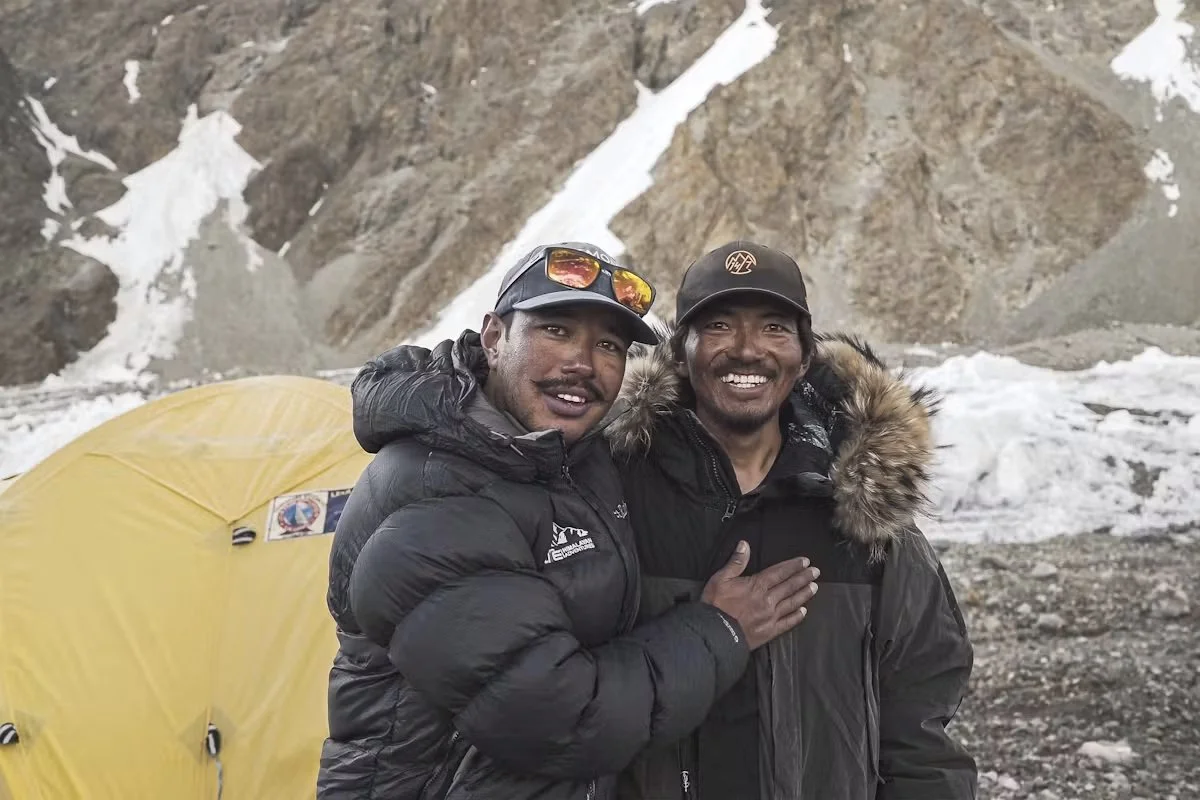
Mingma David Sherpa and Nimsdai Purja MBE
What are some of the biggest obstacles and challenges that you have encountered during your career in the mountains and how did you overcome them?
The mountains test you constantly — physically, mentally, and emotionally. Extreme weather, long separations from family, and the weight of responsibility for your team are all challenges. I have learned that preparation and discipline are your greatest allies. But equally important is mental resilience — staying calm under pressure and making clear decisions when it matters most.
Every obstacle has taught me something, and those lessons have shaped the climber and person I am today.
Mountaineering is not only a physically but an incredibly mentally demanding sport. How do you ground yourself and do you have a practice that helps you deal with the adversity of having to brave the weather and the many challenges of ascending these peaks?
I focus on what I can control — my breathing, my pace, my mindset. Staying present is very powerful in the mountains. Experience also brings perspective. When you respect the conditions instead of fighting them, you make better decisions. And I always remind myself that turning back is not failure; sometimes it is the strongest choice you can make.
Balance comes from discipline, reflection, and gratitude for the opportunity to climb.
How do you feel about more and more Western influencers coming to climb mountains like Sagarmatha (Everest) without necessarily having the right training and experience, but to attract attention on social media and/or help sell their coaching business? Does it matter what intention one has when he or she goes to climb the 8000ers and do people who lack the proper physical training put others around them at risk?
Mountains do not care about popularity or followers. Without proper training and preparation, climbers not only risk their own lives but can also endanger others, including guides and rescue teams. Intentions matter, but responsibility matters more. Climbing an 8,000-meter peak should come from respect and readiness — not just the desire to be seen.
I always encourage climbers to earn their place on the mountain through preparation and experience.
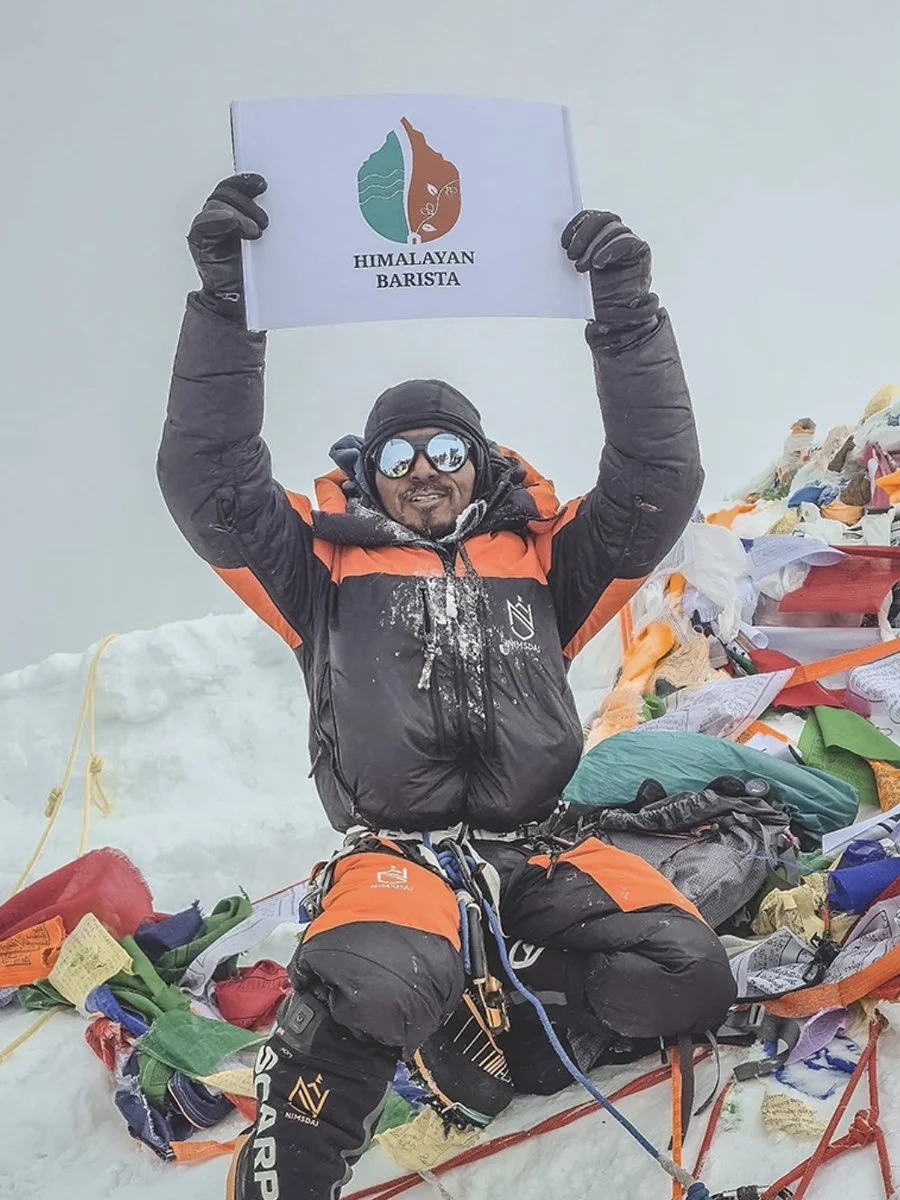
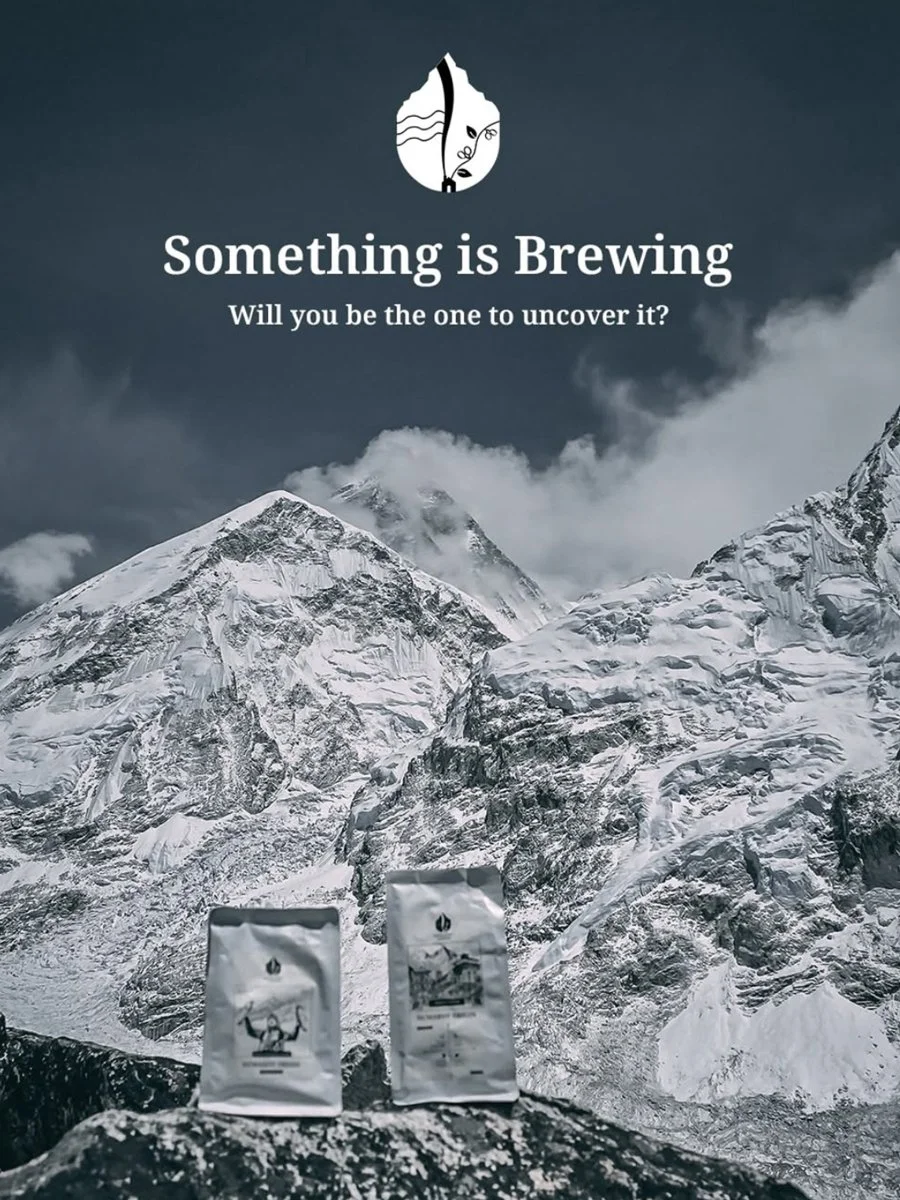
As a huge fan of coffee, and a former barista, I have to ask. Do mountaineers drink a lot of coffee during the expeditions? What inspired you to start Himalayan Barista and where can we find and buy this blend?
A good cup of coffee in the mountains can lift morale instantly — it brings warmth and a sense of comfort in a very harsh environment. Himalayan Barista was inspired by my love for coffee and my desire to connect people with the spirit of the Himalayas in a different way. It is more than just a blend; it represents passion, community, and the stories that come from these mountains.
My heartfelt congratulations. You were recently appointed the first Vice President of the Nepal Mountaineering Association (NMA). Can you talk about what the NMA does and what it’s like to be at the helm of this organization?
It is a great honor and also a serious responsibility. The NMA plays an important role in promoting safe mountaineering, supporting climbers, and protecting our mountain environments. In this position, I hope to contribute my experience to strengthen the future of mountaineering in Nepal — improving standards, creating opportunities, and ensuring sustainable practices.
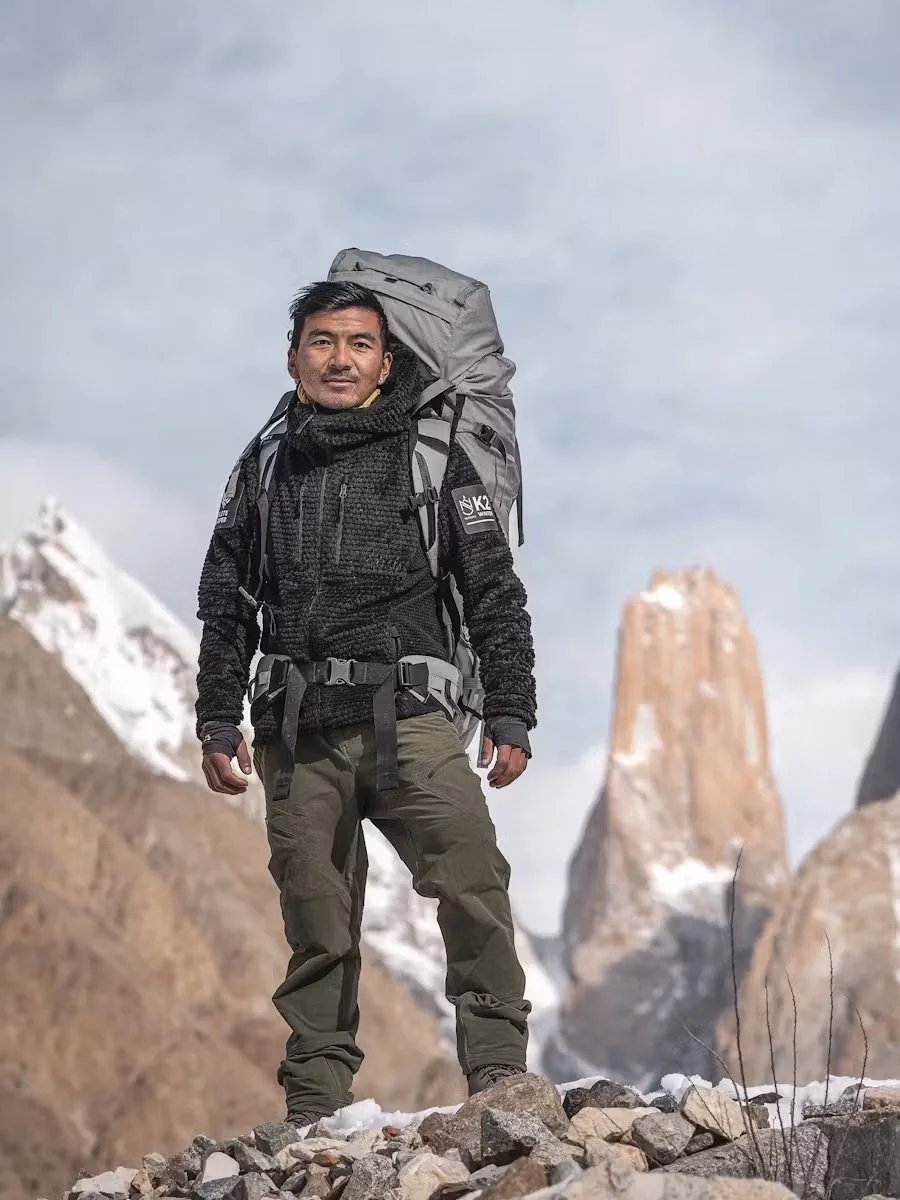
You are the recipient of the coveted Piolet d’Or Asia award - equivalent to an Oscar in the mountaineering world. How does it feel to be recognized in this way by your community, and when you were a young boy did you ever think that you would go on do so much for the world of mountaineering and win such high accolades?
Honestly, as a young boy growing up in a farming family, I could not have imagined this path. Receiving such recognition is deeply humbling. Awards are meaningful, but what matters most to me is the journey — the people I have climbed with, the lessons learned, and the chance to represent Nepal on the world stage.
If my story inspires even one young person to believe in their dreams and work hard for them, then that is the greatest reward.
Photo Credit: Elite Exped